Tuesday, May 22, 2018

Due Monday, June 4th - It's Alive! - Final Project for Mary Shelley's "Frankenstein"

Overview: In small groups, you will create you own perfect being! Unlike Victor, you will all become responsible parents and teach your creation about life by creating a thoughtful Prezi about core values and the meaning of life (no biggie). Then, you will present your creation to the class, show your Prezi, and we will work together to educate the Creation like responsible citizens of the world.


Image result for frankenstein

Part I: It’s Alive! 

Create your perfect being. Be creative. Create a visual with sound to make your creation come to life!
Use images from the internet. Create a perfect computer image.  Use sound.  Animation.  Better yet, use famous people to give us an idea of the feeling behind your choices. Consult the list below:

  • Appearance:  Gender, height, eyes, nose, face, ears, hair, arms, legs, feet, hands - in other words - break it down carefully.
  • Mind:  Intelligence, personality, talents, sexuality, temperment, etc.
  • Voice
  • Mannerisms
  • Other attributes you can think of?
  • Special Powers?
Image result for ryan goslingImage result for gal gadotImage result for mozart


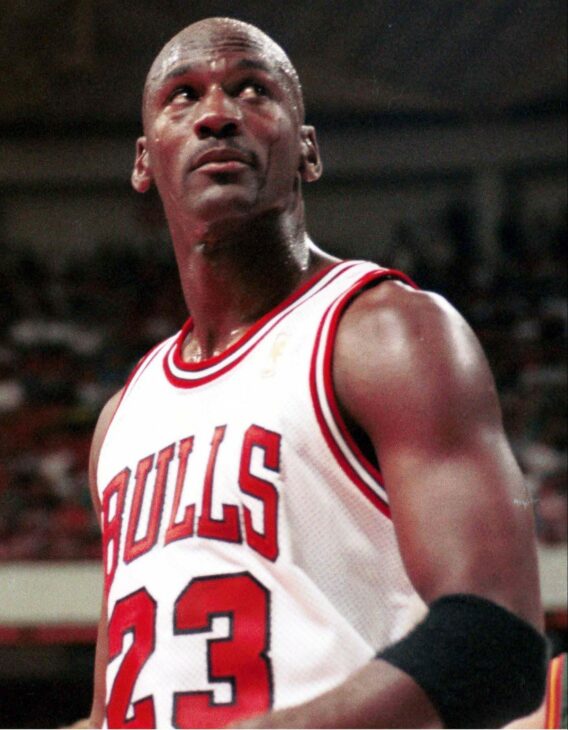
Image result for beyonceImage result for dalai lamaImage result for michael jordan

Image result for einsteinImage result for oprahImage result for oscar wildeImage result for michael jackson


Part II: The Prezi

Now that it’s alive. How will you raise your “child in the world”?  Create a Prezi (or a platform you like better) to teach your creation about the following topics:

  • Science 
  • Religion
  • Empathy 
  • Politics
  • Pop Culture
  • The Meaning of Life

Use what you have been learning in school.  Create a presentation that would help get the ball rolling for your creation.  Use images.  Research.  Facts.  Be creative.  Be aware of your audience.  What questions will arise? 


Part III:  Teach 

It turns out you were not the only one to create life.  You will present your Prezi to the class.  The class will take on the persona of your Creation (based on your criteria).  The class will ask questions as you present your Prezi, in much the same manner as the Creation learned from the family in the novel.  


Tuesday, May 15, 2018

Due Tuesday, May 22nd - Finish Reading "Frankenstein" by Mary Shelley PP. 97-166

Please finish reading the novel and compose a four paragraph blog response using ALL FOUR of the questions in your response.

1.  Mary Shelley is careful to outline the progression of the Monster's awareness, beginning with his earliest sense impressions, and this progression seems to duplicate the stages of infant, child, and general human development. Does this account tell us anything important about what it means to be human?

2. Frankenstein may seem to endorse the common modem sociological premise that antisocial or criminal behavior is conditioned by rage, which in turn is induced by society's rejection of its marginal members. Does the novel give clear support to this sociological premise?

3. After Frankenstein's decision not to create a female mate for the Monster, the latter vows to avenge himself on Frankenstein on his wedding day. Through all the long months during which Frankenstein broods over this threat, it never occurs to him that Elizabeth, and not he himself may be the intended victim. What do you make of his rather incredible lapse of imagination?

4. Even though the monster seems to learn compassion and reason from the cottagers, he still--in the end--vows to make humans suffer. Why? What prevents the monster from developing a sense of ethics?

Thursday, May 10, 2018

Due Monday, May 14th - Read "Frankenstein" by Mary Shelley - Chapters IX - XV (PP. 61-97)

Directions:  
1)  Over the course of this week, please read Frankenstein by Mary Shelley - Chapters IX - XV (Pages 61-97).  
2) Please complete a detailed, comprehensive, blog response, by selecting TWO of the questions below AND direct evidence from the text in your responses.  You need not attend to every nuance in each question, but create a response that covers the reading selection and be thinking about what is meaningful about these plot points.


Study Questions:


Ch. IX-XII

1. What does the creature ask of Victor? What does the creature say to Victor? Does his language remind you of another literary work? How good is Victor at performing the role of creator for his creature?

2. Why has the creature caused the deaths of William and Justine? Is he as inherently evil and bloodthirsty as Victor has assumed? What will cause the creature to change? Keep in mind his statement "I was benevolent and good; misery made me a fiend. Make me happy, and I shall again be virtuous". What sort of psychological understanding is Shelley showing here?

3. What happens during his first encounters with people? What does he learn about the people who live in the cottage? How does he feel toward them? How does the creature continue to learn about the family he is watching? How might a modern anthropologist or sociologist respond to the creature's methods? What is the condition of the family? How does the creature manage to help them?

4. What things bother the creature when he thinks of discovering himself to the family? How does he respond to his own appearance when he sees it? How does the creature hope to win over the family? How does he respond to the coming of spring?

Chs. XIII-XV

5. What book does Felix use to teach Safie? What does the creature learn from this book? How much of a monster can someone be who can say "but when I heard details of vice and bloodshed, my wonder ceased, and I turned away with disgust and loathing”?

6. What happens when the creature begins to think about himself? How does he compare with the humans described in the book? What questions does he ask himself? How does his knowledge make him feel?

7. What does he learn about human relationships, and how does this make him feel? How did the De Lacey family come to be living in the cottage? How did Safie come to find and join them? What does the creature hope will happen when he talks to De Lacey? What actually happens?


Friday, May 4, 2018

Due Wednesday, May 9th - "Frankenstein" by Mary Shelley - Chapters III-VIII (pp. 23-60)

1)  Please read Frankenstein by Mary Shelley - Chapters III-VIII (pp. 23-60)
2)  Complete a blog response using the prompt below (use direct quotations from the text).


Prompt:  a) One way to read the final chapters of Volume One is to consider what Mary Shelley might be saying about the justice system. What is the problem with the judicial system?
b) Also, is Frankenstein a condemnation of science?  Given what you have read so far, what examples from our current society do you see metaphorically happening in this novel?

Tuesday, May 1, 2018

Due Thursday, May 3rd - Read "Frankenstein" by Mary Shelley, Letter IV and Chapters I-II, pages 8-23

1)  Please read "Frankenstein" by Mary Shelley, Letter IV and Chapters I-II, pages 8-23.

2)  Please respond to FIVE of the questions below in this blog space using direct evidence from the text.  Read each other's responses and try to create a cross-section of questions from each of the sections.  Please list which numbers you are doing, so other can choose different one.

We will go through these one by one tomorrow in class...and we will begin the film Surrogates.


1. Show how the Letters frame the upcoming story of Frankenstein.
2. Analyze how Robert Walton’s life and travels adhere to the ideals of Romanticism.
3. Explain how Walton educates himself for his sailing adventure.
4. Predict how successful Walton’s voyage will be to find an Arctic passage, and the problems he could encounter on his adventure.
5. What does Walton desire when he writes the second letter?
6. Explain why Walton feels particularly fortunate to have secured the master of his ship.
7. Show how the shipmaster’s failed love story adheres to the ideals of Romanticism.
8. Infer how Walton’s “belief in the marvelous” makes him an ideal listener of Frankenstein’s story.
9. Formulate how the setting of the fourth letter is typically Romantic.
10. Tell what the sailors first see in the distance.
11. Describe the man who boards the ship.
12. Explain why the man is in the Arctic.
13. Analyze how the man fulfills Captain Walton’s desires.
14. Generalize why the man agrees to tell Walton his story.
15. Evaluate why the man cautions Walton against his “search for knowledge and wisdom.”
16. What is Walton’s duty as the man tells his story?

Chapter One
17. Tell how Victor Frankenstein’s parents met.
18. Summarize how Mary Shelley interjects her social interest of caring for the poor into Frankenstein.
19. Show how Shelley portrays the women, Caroline and Elizabeth, in Chapter One.
20. Describe Victor’s childhood.
21. Explain how Elizabeth comes into the Frankenstein home.
22. Assess how Victor feels about Elizabeth.

Chapter Two
23. Tell about Victor’s social tendencies and how he interacts with friends.
24. Contrast Victor’s academic interests with those of his friend, Henry Clerval.
25. Infer Victor’s meaning when he says of his desire to learn about science: “I find it arise, like a mountain river, from ignoble and almost forgotten sources; but, swelling as it proceeded, it became the torrent which, in its course, has swept away all my hopes and joys.”
26. Which authors and topics does Victor become obsessed with reading?
27. Generalize how Victor learns about alchemy and natural science. How does this fit with the characteristics of Romanticism?
28. Describe Victor’s experience with lightning. How was it a turning point in his life?
29. Explain Victor’s destiny. Locate a quote from the novel to support your answer.

Tuesday, April 10, 2018

Due Thursday, April 26th - Oscar Wilde "Test"

Overview: 45 Question Multiple Choice and a short essay. Study the background on Wilde and Aestheticism, as well as The Picture of Dorian Gray and his play An Ideal Husband. Below are examples taken from the test.


Part I: Oscar Wilde – His Life and Other Writings


1) What was Oscar Wilde’s nationality by birth?
a. Russian
b. German
c. English
d. Irish


Part II: The Picture of Dorian Gray


17) Why won't Basil exhibit his portrait of Dorian?
a. It is not his best work
b. It is meant as a gift for Dorian
c. In it he sees his secret soul
d. Both b and c


Part III: An Ideal Husband


Find full text here: https://www.gutenberg.org/files/885/885-h/885-h.htm

27) Why does Lady Chiltern say she'll always love Sir Robert in Act 1?
a. He's her husband.
b. He comes from a proper family.
c. He is successful.
d. He will always be worthy of love.
e. He is an ideal


Part IV: Open Response


Compose a brief essay using An Ideal Husband or The Picture of Dorian Gray. Use the prompt below. You may bring an outline to class:


In many plays and novels, a character has a misconception of himself or his world. Destroying or perpetuating this illusion contributes to a central theme of the play. Using An Ideal Husband or The Picture of Dorian Gray, choose a major character to whom this statement applies and write an essay in which you consider the following points: what the character’s illusion is and how it differs from reality as presented in the play and how the destruction or perpetuation of the illusion develops a theme of the play.


Due Saturday, April 28th - The Artificial Artist

Talent borrows, genius steals – Oscar Wilde


Directions:  Write a review of novel, film, artwork, or other medium as if you were Oscar Wilde (you may also focus on an author, artist or musician if you wish).   This is an exercise in exploring style, as well as substance, which is to say that this will be about nothing, which is everything. This will count as a writing grade.


Part I: Reading Criticism

The public have an insatiable curiosity to know everything, except what is worth knowing.
– Oscar Wilde

It contains reviews by Oscar Wilde.  Read “Dinner and Dishes” which is supposed to be about an actual book, but Wilde plays on words and gives a review of his favorite dining areas.  Also explore the ones about Shakespeare to get a sense of his critical voice and wit. 


Part II:  Research

The one duty we owe to history is to rewrite it. – Oscar Wilde

Choice of subject.  Choose something, which will lend itself to Wilde’s Wit. Further, if you are to be a critic, you must be knowledgeable.  Know your subject inside and out. Content should look like a major essay.  Introduce your subject in some way, the body of the document must have detailed evidence and be a pleasure to read with smooth transitions, and a conclusion. 


Part III:  The Art of the Review

The difference between literature and journalism is that journalism is unreadable and literature is not read. – Oscar Wilde

My advice is to look up modern examples for reviews to help get the basic structure.  For example, if you are writing a review of the film Jaws (1975) look at the Chicago Sun Times for Roger Ebert’s review or The New Yorker, something with a critical eye. 


Part IV:  Language and Style

If you want to tell people the truth, make them laugh, otherwise they will kill you. – Oscar Wilde

Try to capture the voice and style of Oscar Wilde.  Review and read some of his prose.  He will get into your head and come out of your pen.  Review his epigrams at the following link:

Above all, it must be beautiful and adhere to the tenants of Aestheticism. 

1) Art never expresses anything but itself.
2) All bad art comes from returning to Life and Nature, and elevating them into ideals.
3) Life imitates Art far more than Art imitates Life.
4) Lying, the telling of beautiful untrue things is the proper aim of Art.


Part V:  Grading Your Work

One can only give an unbiased opinion about things that do not interest one, which is no doubt the reason an unbiased opinion is always valueless. The man who sees both sides of a question is a man who sees absolutely nothing. – Oscar Wilde

1.      What point is the author getting across in the review?  (10 Points)                                                    
2.      Does the author have a clear knowledge of the piece being reviewed                                     
and makes direct references in the review?   (30 Points)                                                                                         
3.      Does the review showcase the development of idea from the beginning                               
of the argument to the end?  (10 Points)                                                                                                                                                
4.      Does the piece sound like Oscar Wilde, consistently?  (20 Points)                                                           
5.      Is there an advanced use of vocabulary and diction?  (10 Points)                                                                
6.      Does the author utilize and create epigrams and make proper use of paradox? (20 Points)                  


Thursday, April 5, 2018

Due Monday, April 9th - "The Picture of Dorian Gray" by Oscar Wilde - Chapters XIV - XVIII (pages 118-154)

1)  Read The Picture of Dorian Gray by Oscar Wilde - Chapters XIV - XVIII (pages 118-154).  We will read the last two chapters together.

2)  Compose a blog response using direct quotations from the text and the philosophies of Oscar Wilde.  Think about the conversations from class regarding life imitating art, the nature of evil, etc.

I look forward to your responses...